![/Users/zhengcoco/Desktop/Mela Group JPG Crop[4].jpg](https://cdn11.bigcommerce.com/s-axbjcdl01r/images/stencil/250x100/mela_group_jpg_crop4_1553656473__69488.original.jpg "/Users/zhengcoco/Desktop/Mela Group JPG Crop[4].jpg")
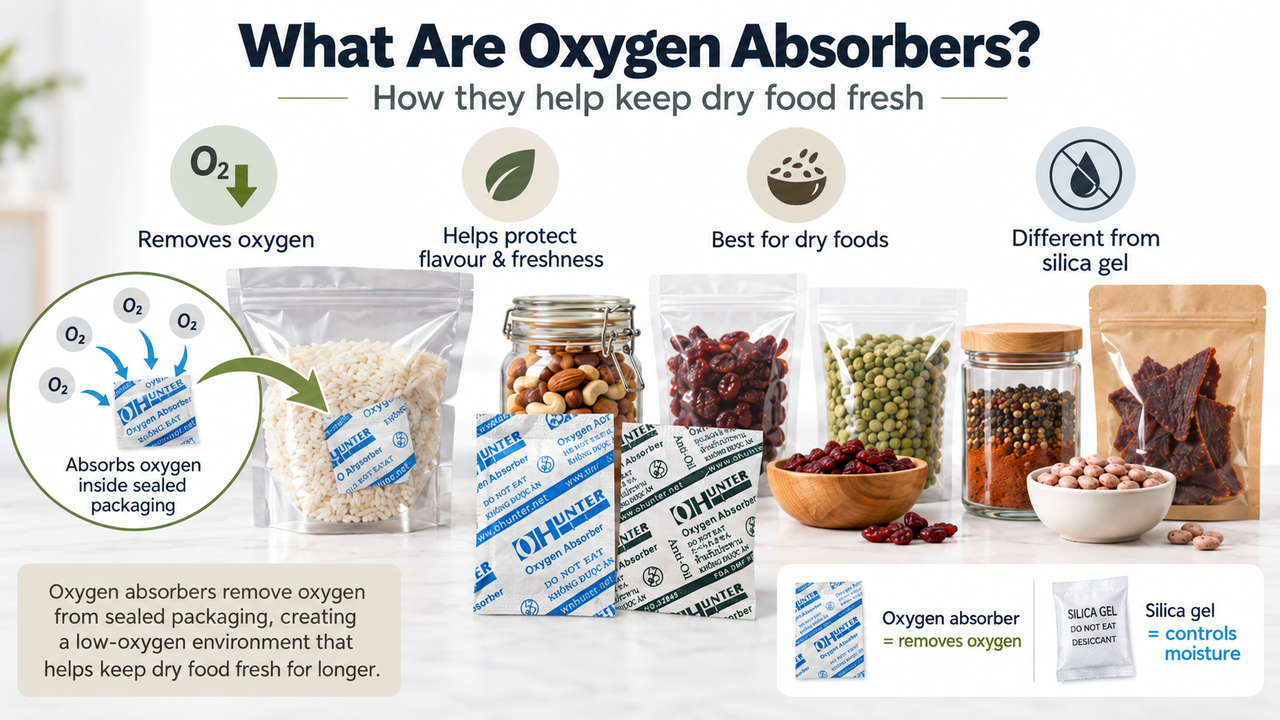
What Are Oxygen Absorbers and How Do They Keep Food Fresh?
Keeping dry food fresh for longer can be challenging, especially when oxygen inside the packaging causes changes in flavour, colour and overall product quality. Oxygen absorbers provide a simple and effective way to reduce the amount of oxygen inside sealed food packaging.
Whether you are packaging dried fruit, grains, nuts, snacks or other dry foods, understanding how oxygen absorbers work can help you choose the right product for your application.
What Is an Oxygen Absorber?
An oxygen absorber is a small packet designed to remove oxygen from the air inside sealed packaging.
Most oxygen absorbers contain an iron-based material that reacts with oxygen after the packet is exposed to air. Once placed inside a properly sealed package, the absorber gradually removes available oxygen and helps create a low-oxygen environment.
Oxygen absorbers are available in different capacities, commonly measured in cc, such as 20cc, 50cc, 100cc, 200cc, 300cc, 500cc and 1000cc.
The correct size depends on the volume of the packaging, the type of food being packed and the amount of air remaining inside the package.
Why Is Oxygen a Problem in Food Packaging?
Oxygen can contribute to several unwanted changes in stored food, including:
- Oxidation of fats and oils
- Changes in flavour and aroma
- Colour deterioration
- Reduced product quality
- Shorter storage life
Removing excess oxygen from suitable sealed packaging can help protect food quality during storage.
What Foods Can Oxygen Absorbers Be Used With?
Oxygen absorbers are commonly used with dry or low-moisture foods such as:
- Rice
- Flour
- Pasta
- Dried beans
- Cereal
- Dried fruit
- Nuts
- Seeds
- Spices
- Dried herbs
- Dehydrated foods
- Pet treats
- Jerky and other suitable packaged foods
- Bakery and snack products
The food should be suitable for oxygen-reduced storage and packed in appropriate airtight or high-barrier packaging.
Oxygen absorbers are not a substitute for proper food handling, refrigeration or other required preservation methods.
Oxygen Absorbers vs Silica Gel Desiccants
Oxygen absorbers and silica gel desiccants perform different jobs.
An oxygen absorber removes oxygen, while a silica gel desiccant absorbs moisture.
For example, if your main concern is oxidation or oxygen-related food deterioration, an oxygen absorber may be appropriate.
If your main concern is moisture, condensation or humidity, a silica gel desiccant may be more suitable.
Some packaging applications may require both oxygen and moisture control, depending on the product and packaging conditions.
How Do You Choose the Correct Oxygen Absorber Size?
Oxygen absorber capacity is normally shown in cubic centimetres, or cc.
For example:
- 20cc oxygen absorber
- 50cc oxygen absorber
- 100cc oxygen absorber
- 200cc oxygen absorber
- 300cc oxygen absorber
- 500cc oxygen absorber
- 1000cc oxygen absorber
A larger packet can absorb more oxygen.
Choosing the correct capacity depends on factors including:
- Package dimensions
- Amount of empty space inside the package
- Type and density of the food
- Packaging material
- Desired storage conditions
It is generally better to select an absorber with sufficient capacity rather than choosing one that is too small for the package.
How to Use Oxygen Absorbers
Oxygen absorbers begin working once they are exposed to air, so preparation is important.
1. Prepare Your Food and Packaging
Make sure your food and packaging are ready before opening the oxygen absorber bag.
Use suitable airtight or high-barrier packaging whenever possible.
2. Open the Oxygen Absorber Package
Remove only the number of absorbers you need.
Avoid leaving unused oxygen absorbers exposed to air for extended periods.
3. Place the Absorber Inside the Package
Place the appropriate oxygen absorber inside the food package.
The packet should remain intact and should not be opened.
4. Seal the Package
Seal the package as soon as possible after inserting the oxygen absorber.
5. Store Unused Absorbers Correctly
Unused oxygen absorbers should be resealed in suitable airtight packaging to reduce unnecessary exposure to oxygen.
Common Oxygen Absorber Mistakes
Some common mistakes include:
Leaving absorbers exposed to air for too long
Oxygen absorbers begin reacting as soon as the outer package is opened.
Using an absorber that is too small
An undersized oxygen absorber may not have enough capacity for the amount of oxygen inside the package.
Using unsuitable packaging
Highly breathable packaging can allow more oxygen to enter, reducing the effectiveness of the absorber.
Confusing oxygen absorbers with desiccants
Remember that oxygen absorbers remove oxygen, while silica gel desiccants primarily control moisture.
Oxygen Absorbers for Food Packaging in Australia
At Silica Bags, we supply oxygen absorbers in a range of capacities for food storage and packaging applications across Australia.
Available sizes include oxygen absorbers from smaller capacities through to larger options for different packaging requirements.
Choosing the correct absorber can help maintain product quality and provide more effective oxygen control inside sealed packaging.
For more information, explore our range of oxygen absorbers and choose the size that best suits your packaging requirements.